
Accessibility & Aging-in-Place Bathroom Remodeling
An accessible, aging-in-place bathroom helps you or a loved one stay safe and independent at home for years to come. From curbless showers and grab bars to comfort-height fixtures and zero-step entries, thoughtful design reduces fall risk without sacrificing style. This guide covers key features, general cost ranges, the process, and how to find local contractors.
Why Aging-in-Place Remodeling Matters
The bathroom is statistically one of the most common places for falls in the home — wet surfaces, hard fixtures, and tight spaces create real risk, especially for older adults and people with mobility challenges. Aging-in-place remodeling redesigns the bathroom for safety, accessibility, and long-term independence so people can remain comfortably in their own homes.
Beyond safety, accessible design is increasingly seen as smart, future-proof remodeling. Features like curbless showers and comfort-height fixtures are attractive to buyers of all ages and blend seamlessly into modern bathroom styles. For more on planning, see our related guides on senior bathroom remodeling and ADA bathroom remodeling.
Key Accessibility Features
A well-designed accessible bathroom often combines several of these elements:
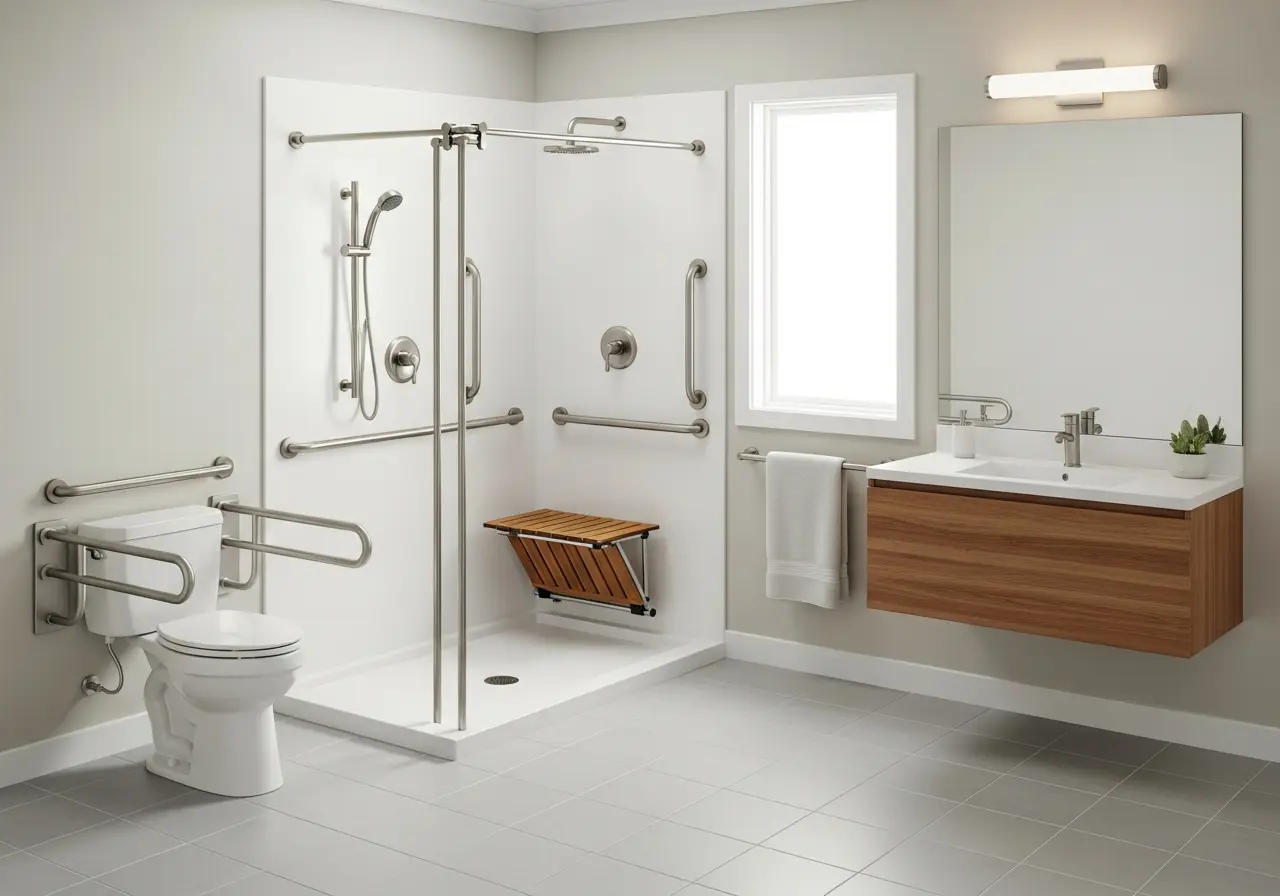
- Curbless (zero-threshold) walk-in showers — Eliminate the step-over that causes many falls.
- Grab bars — Securely anchored bars near the toilet, shower, and tub for stability.
- Walk-in tubs — Low-threshold entry with a built-in seat and door for safer bathing.
- Comfort-height (ADA) toilets — Taller seats that are easier to sit on and stand from.
- Built-in shower benches & seating — Allow seated bathing and rest.
- Handheld showerheads — Adjustable for seated or standing use.
- Slip-resistant flooring — Textured tile or vinyl that stays safer when wet.
- Wider doorways & turning space — Accommodate walkers and wheelchairs.
- Lever handles & accessible storage — Easier to operate with limited grip or reach.
Average Accessibility Remodel Cost
The ranges below are general estimates from publicly available industry cost data — not quotes. Costs depend on which features you add, your bathroom size, and your local labor market.
| Project / Feature | Typical Installed Cost |
|---|---|
| Grab bar installation (per bar) | $100 – $300 |
| Comfort-height toilet | $350 – $800 |
| Curbless walk-in shower | $5,000 – $15,000+ |
| Walk-in tub | $5,000 – $12,000+ |
| Widening a doorway | $500 – $2,500 |
| Full accessible bathroom remodel | $12,000 – $35,000+ |
Use our bathroom remodel cost calculator to estimate your project, or read the broader bathroom remodel cost guide for context.
What Affects Your Final Price
- Scope of changes — A few grab bars cost far less than a full curbless conversion.
- Structural work — Widening doorways, reframing, or relocating plumbing adds cost.
- Curbless shower waterproofing — Recessing and sloping the floor drain is specialized work.
- Fixture and finish level — Premium walk-in tubs and tile raise the budget.
- Regional labor rates — Costs vary significantly by area. Browse costs by state.
The Accessibility Remodel Process
- Needs assessment — A contractor (often working with an occupational therapist's input) evaluates current and future mobility needs.
- Design & planning — Prioritize features within your budget, focusing on the highest-impact safety upgrades first.
- Demolition & prep — Old fixtures are removed and the space is prepared, including framing and blocking for grab bars.
- Plumbing, electrical & structure — Drains are relocated, doorways widened, and walls reinforced as needed.
- Installation & finishing — The shower, fixtures, flooring, grab bars, and seating are installed, sealed, and tested.
Typical Timeline
Timelines vary widely with scope:
- Adding grab bars and a comfort-height toilet: Often 1 day.
- Walk-in tub or prefab walk-in shower: 2–5 days.
- Curbless shower or full accessible remodel: 2–4 weeks, including cure times and inspections.
A qualified contractor should provide a realistic schedule and walk you through any permitting required for structural or plumbing changes.
How We Match You With Accessibility Pros
BathroomRemodelAdvisor365 is an informational and contractor referral platform — we are not a contractor and do not perform work. We connect you with remodeling professionals experienced in accessible and aging-in-place design.
We recommend getting at least three written quotes before hiring. Verify each contractor's credentials and insurance, ask about their experience with accessible and aging-in-place design, request references, and confirm warranties in writing.
Tip: Prioritize the changes that reduce fall risk first — a curbless shower entry, grab bars, and slip-resistant flooring deliver the biggest safety improvement per dollar.
Ready to make a bathroom safer? Request free quotes from local contractors or call (833) 848-1227.
Frequently Asked Questions
How much does an accessible bathroom remodel cost?
What is aging-in-place bathroom remodeling?
Does Medicare or insurance cover accessibility remodeling?
What is the most important bathroom safety feature?
Related Guides
Figures shown are general estimates compiled from publicly available industry cost data and are for informational purposes only. They are not quotes and do not guarantee any price. Actual costs vary widely by location, scope, and contractor. Always obtain written quotes from qualified contractors before making decisions.
Ready to start your project?
Get free, no-obligation quotes from local bathroom remodeling professionals in your area.