
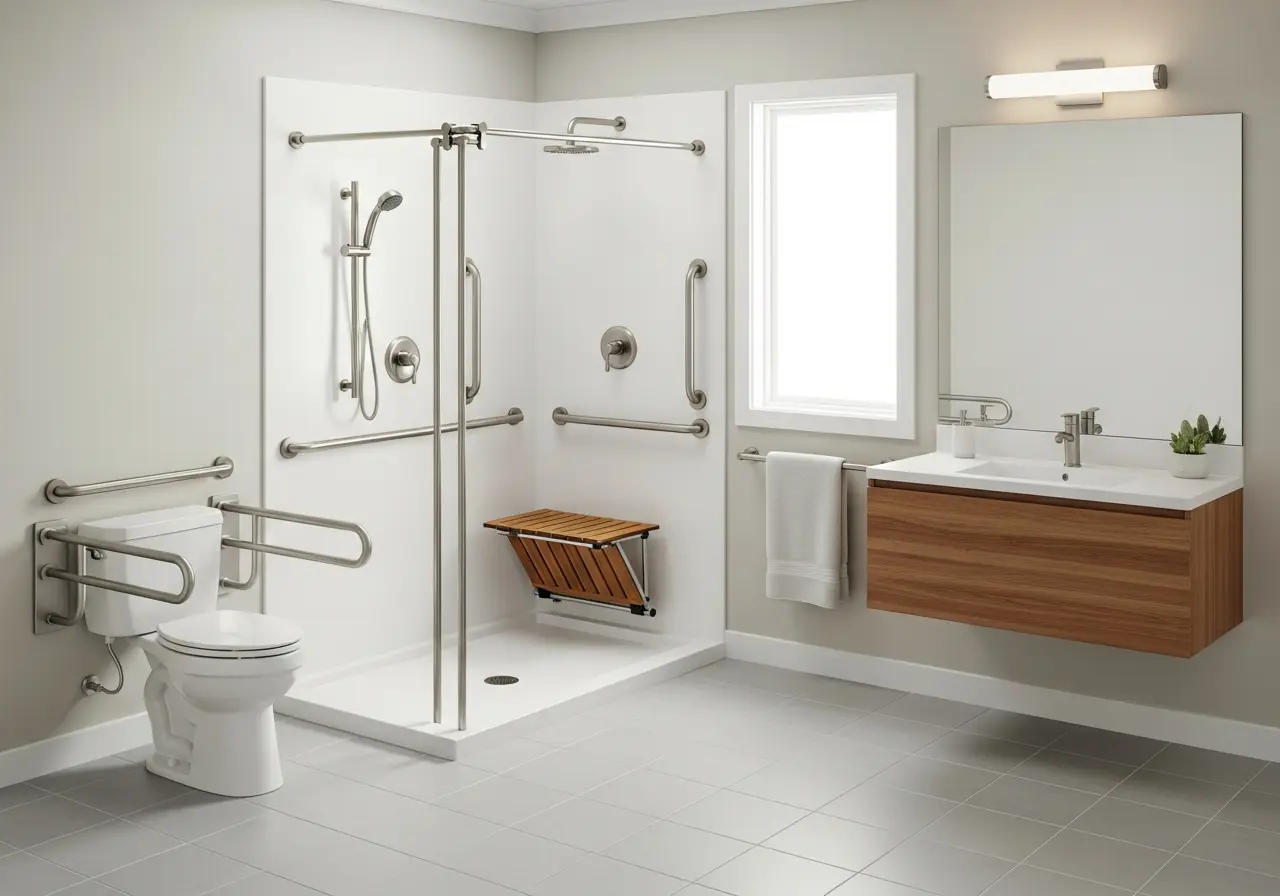
Senior Bathroom Remodel: Aging-in-Place Guide
The bathroom is the most common place for falls in the home, which makes it the top priority for aging-in-place remodeling. This guide covers the safety upgrades that matter most for seniors — grab bars, walk-in tubs, curbless showers, and comfort-height fixtures — along with general cost ranges to help you plan.
Why a Senior-Friendly Bathroom Matters
For older adults who want to stay in their homes, a safe, accessible bathroom is essential. Wet floors, high tub walls, and low toilets all increase fall risk. Thoughtful upgrades reduce those hazards while keeping the room comfortable and attractive — and many improvements help everyone in the household, not just seniors.
The cost figures below are general estimates from publicly available industry cost data, not quotes. Always get at least three written quotes from qualified local contractors for your specific project.
Key Aging-in-Place Upgrades & Costs
| Upgrade | Typical Estimate | Benefit |
|---|---|---|
| Grab bars (per bar, installed) | $100 – $300 | Stability at toilet, shower, and tub |
| Comfort-height toilet | $200 – $700 | Easier to sit and stand |
| Curbless (zero-threshold) shower | $5,000 – $16,000+ | Step-free, wheelchair-friendly entry |
| Walk-in tub | $5,000 – $20,000+ | Low-step entry with a built-in seat |
| Shower bench or fold-down seat | $100 – $1,000 | Safe seated bathing |
| Handheld shower head | $40 – $300 | Flexible, seated use |
| Slip-resistant flooring | $5 – $15 per sq. ft. | Reduces fall risk on wet floors |
| Lever faucet handles | $100 – $400 | Easier for limited hand strength |
| Improved lighting | $300 – $1,500 | Better visibility, fewer shadows |
A full accessible bathroom remodel often falls in the $8,000 to $30,000+ range, depending on how many features you add and whether the layout changes.
Grab Bars and Support
Grab bars are the highest-value safety upgrade dollar for dollar. For real protection they must be anchored into wall studs or solid blocking — not just drywall anchors. Place them near the toilet, at the shower entry, and along shower walls. Modern grab bars come in finishes that blend with the décor, and some double as towel bars or shelves.
Curbless Showers vs. Walk-in Tubs
Two popular options solve the high-tub-wall problem in different ways.
- Curbless (zero-threshold) showers remove the step entirely, creating a roll-in or step-in space that works with a wheelchair or walker. They typically need a recessed or re-sloped subfloor, which adds cost. Add a bench, grab bars, and a handheld shower head for a complete setup. See our walk-in shower cost guide for more.
- Walk-in tubs have a watertight door and a built-in seat, allowing a low step-in entry and seated soaking. They cost more and fill/drain slowly, but suit those who still enjoy a bath.
For homeowners replacing an unused tub, our tub-to-shower conversion guide explains that path in detail.
Layout and Clearance Tips
- Wider doorways (32"+ clear) accommodate walkers and wheelchairs.
- Open floor space allows a turning radius for mobility devices.
- Comfort-height fixtures reduce strain when sitting and standing.
- Reachable storage keeps essentials within easy grasp.
- Lever handles on doors and faucets are easier than knobs.
For a more formal accessibility standard, see our ADA bathroom remodel guide, which covers recommended clearances and fixture specifications.
Planning and Paying for the Project
- Prioritize by risk. Grab bars, slip-resistant flooring, and a step-free entry deliver the biggest safety gains first.
- Consider future needs. Building in blocking for grab bars now saves money later, even if you don't install bars yet.
- Consult an occupational therapist if mobility needs are significant — they can recommend specifics for the individual.
- Explore funding. Some long-term-care policies, veterans' programs, or state aging programs may help with accessibility modifications. Confirm eligibility with the relevant program.
- Compare costs. Use our cost calculator, bathroom remodel cost guide, and costs by state to set a realistic budget, and our financing guide to weigh payment options.
Many aging-in-place features blend safety with style — today's grab bars, curbless showers, and comfort-height fixtures look modern, not clinical.
When you're ready, request free quotes from qualified contractors experienced in accessible bathroom remodeling near you.
Frequently Asked Questions
How much does an accessible senior bathroom remodel cost?
Are grab bars enough to make a bathroom safe?
Should I choose a walk-in tub or a curbless shower?
Does insurance or Medicare pay for bathroom modifications?
Related Guides
Figures shown are general estimates compiled from publicly available industry cost data and are for informational purposes only. They are not quotes and do not guarantee any price. Actual costs vary widely by location, scope, and contractor. Always obtain written quotes from qualified contractors before making decisions.
Ready to start your project?
Get free, no-obligation quotes from local bathroom remodeling professionals in your area.