
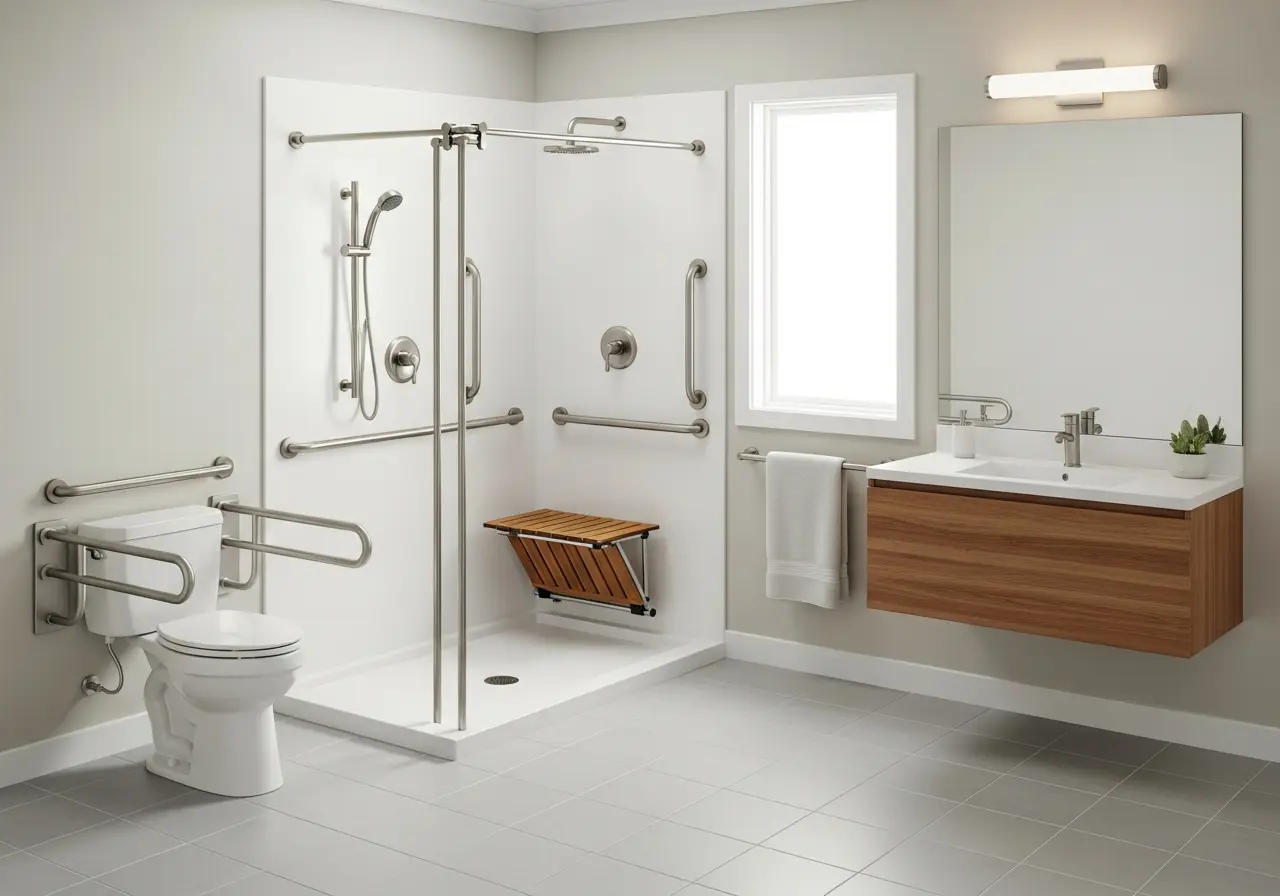
ADA Bathroom Remodel: Requirements, Clearances & Costs
Designing a bathroom around ADA guidelines creates a space that's safe and usable for people with a wide range of mobility needs. This guide explains key ADA clearances, fixture specifications, and accessible features, along with general cost ranges — and how homeowners apply these standards in residential remodels.
What "ADA Bathroom" Really Means
The Americans with Disabilities Act (ADA) sets accessibility standards that legally apply to public accommodations and commercial facilities — not private homes. For a residence, the ADA is best understood as a design guideline: a well-tested benchmark for clearances, grab bars, and fixtures that make a bathroom accessible. Many homeowners follow ADA specifications (or the closely related ICC A117.1 standard) to support aging in place or accommodate a family member's needs.
The cost figures below are general estimates from publicly available industry cost data, not quotes. Confirm any code requirements with your local building department, and always get at least three written quotes from qualified local contractors.
Key ADA Clearances and Dimensions
| Element | ADA Guideline | Why It Matters |
|---|---|---|
| Door clear width | 32" minimum | Allows wheelchair and walker passage |
| Turning space | 60" circle or T-turn | Room to maneuver a wheelchair |
| Toilet seat height | 17" – 19" | Easier transfers |
| Toilet centerline from wall | 16" – 18" | Proper transfer space and grab-bar reach |
| Grab bars (rear & side) | 33" – 36" above floor | Stable support at the toilet |
| Roll-in shower size | 30" x 60" minimum | Wheelchair-accessible bathing |
| Sink/counter height | 34" max, knee clearance below | Forward-approach access |
These dimensions are guidelines; your situation may call for adjustments based on the individual's needs.
Accessible Fixtures and Features
- Roll-in or curbless shower with a zero or low threshold for step-free entry. See our walk-in shower cost guide for build details.
- Grab bars anchored into studs or solid blocking at the toilet and in the shower.
- Comfort-height toilet (17"–19" seat) for easier transfers.
- Wall-mounted or pedestal sink with knee clearance and insulated pipes.
- Lever faucet handles that require no tight grasping or twisting.
- Handheld shower head on a slide bar for seated use.
- Fold-down shower seat for safe seated bathing.
- Slip-resistant flooring to reduce fall risk.
- Accessible storage and controls within reach ranges (typically 15"–48" above the floor).
Typical ADA-Style Remodel Costs
| Feature | Typical Estimate |
|---|---|
| Roll-in / curbless shower | $5,000 – $16,000+ |
| Widened doorway (32"+ clear) | $500 – $2,500 |
| Grab bars (per bar, installed) | $100 – $300 |
| Comfort-height ADA toilet | $300 – $900 |
| Wall-mounted accessible sink | $400 – $1,500 |
| Slip-resistant flooring | $5 – $15 per sq. ft. |
| Full ADA-style bathroom remodel | $12,000 – $35,000+ |
Layout changes — widening doorways, expanding floor space for a turning radius, and recessing the subfloor for a roll-in shower — are the biggest cost drivers, because they involve framing, plumbing, and sometimes moving walls.
Layout Planning Tips
- Plan the turning space first. A 60" turning circle (or T-shaped turn) often dictates the whole layout.
- Position the toilet for transfers, leaving clear space beside it and room for grab bars.
- Choose a roll-in shower sized at least 30" x 60" with the controls reachable from the entry.
- Keep approaches clear so a wheelchair user can pull up to the sink and reach controls.
- Build in blocking behind walls for current and future grab bars.
For broader aging-in-place context, see our senior bathroom remodel guide. To compare overall pricing, review the bathroom remodel cost guide, try our cost calculator, and browse costs by state.
Permits, Codes, and Professional Help
Because accessible remodels often involve plumbing relocation, electrical work, and structural changes, permits are commonly required. Your local building department sets the rules that legally apply to your project. For complex needs, an occupational therapist can recommend specifications tailored to the individual, and a contractor experienced in accessible builds can execute them correctly.
Remember: the ADA itself governs public spaces, but its specifications are a proven roadmap for building a safe, accessible home bathroom.
When you're ready, request free quotes from qualified contractors experienced with accessible bathroom remodels near you. Any agreement is solely between you and the contractor, and you're responsible for verifying their credentials.
Frequently Asked Questions
Does the ADA apply to a home bathroom remodel?
How much does an ADA-style bathroom remodel cost?
What is the minimum door width for an accessible bathroom?
What size does a roll-in shower need to be?
Related Guides
Figures shown are general estimates compiled from publicly available industry cost data and are for informational purposes only. They are not quotes and do not guarantee any price. Actual costs vary widely by location, scope, and contractor. Always obtain written quotes from qualified contractors before making decisions.
Ready to start your project?
Get free, no-obligation quotes from local bathroom remodeling professionals in your area.